
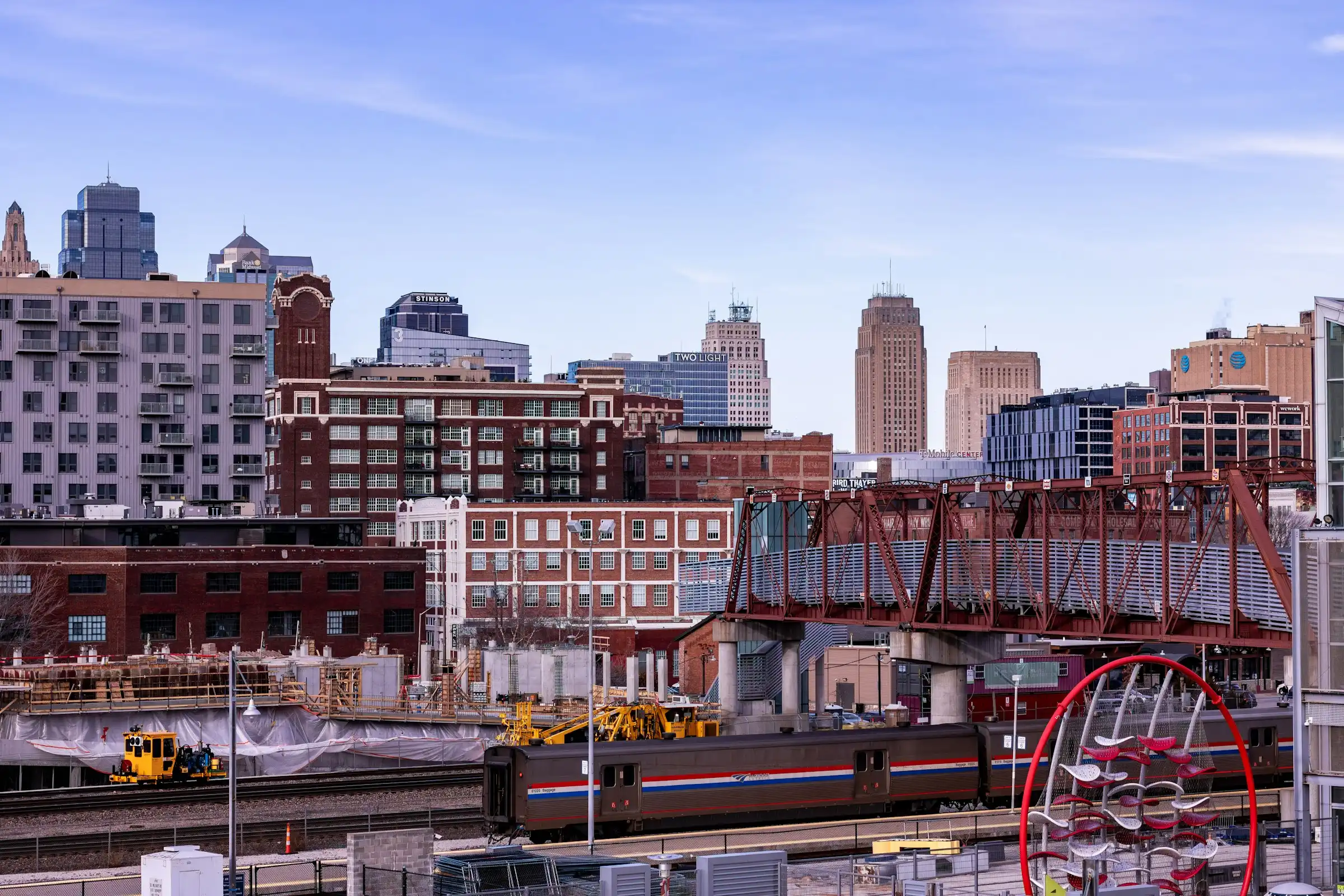
Kansas City covers a century of housing, and a garage door here can be anything from a 1920s wood door to last year's builder package.
Brookside, Waldo and the old south side
The prewar neighborhoods running south from the Plaza are some of our favorite work and some of the most demanding. Detached garages off the alley, single openings that are frequently 8 feet wide and 7 feet tall, original framing that has moved eighty or ninety years, and a lot of original wood doors still hanging.
Two things to know if you live down here. First, an opening that has racked over the decades is no longer square, and a door hung square in a crooked opening will bind and wear a spring unevenly. We measure at several points and shim to the building. Second, if you are keeping an original wood door, the spring has to be sized to what that door weighs today. Wood absorbs moisture over the years and gains weight, and a spring matched to the factory number will leave you fighting the door.
The Northland
North of the river the housing shifts to post-war ranches and 1960s and 1970s subdivisions, with attached two-car garages and a lot of extension springs still in service. The specific thing we look for up here is whether a safety cable runs through those springs. Many older Northland installations never had them, and a spring that breaks under tension without a cable through it goes somewhere unpredictable.
South Kansas City and the newer edges
Out toward 150 Highway the housing is newer and wider — three-car garages, 16-foot openings, more exposure to wind. Struts and heavier gauge matter more here than they do on a sheltered Brookside lot.
Working in the city
Parking, alleys and one-way streets are all part of the job in Kansas City. Tell us what the access looks like when you book and we will plan for it rather than circling the block with a door on the rack. Most repairs are same-day; a full replacement is ordered to spec and runs one to two weeks.
