
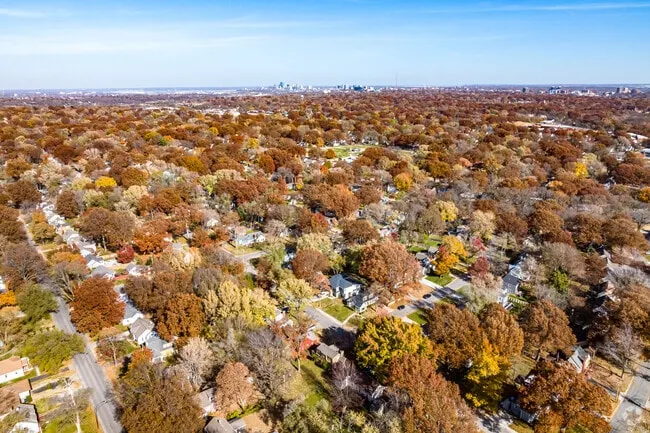
Roeland Park's hills are the reason its garage doors wear the way they do.
Hills, slopes and what they do to a door
Roeland Park sits on some of the most abrupt terrain in northeast Johnson County, and the driveways show it. Steep approaches are the defining feature of working here. Two things follow from that. First, water runs toward the door on a downhill drive, so bottom seals and bottom sections take a beating — rust at the bottom edge is the most common thing we find on a Roeland Park inspection. Second, a car parked on a slope sits closer to the door than the driver thinks, which is how doors get hit.
If your driveway pitches toward the garage, ask us about a threshold seal. It bonds to the concrete and gives water a lip to stop at before it reaches the door. It is an inexpensive add-on and it solves a problem that otherwise eats the bottom section of every door you ever hang there.
1950s construction, 1950s hardware
Most of Roeland Park went up between 1948 and 1960, and single-car attached garages are the norm. Low headroom, extension springs, and original track are all common. Where the framing has aged, track lags work loose and the whole vertical rail drifts a quarter inch off plumb — which is enough to make the door bind and the opener labor. Re-plumbing and re-lagging the track is usually a same-visit fix and it makes a tired door feel decades younger.
What is worth repairing
Plenty of Roeland Park doors are old enough that people assume replacement. Often they are wrong. If the sections are sound and only the hardware is worn, a full re-hardware — springs, rollers, hinges, bearings, cables — costs a fraction of a new door and buys years. We will tell you honestly which side of that line your door is on.
Getting to you
About twenty minutes from the shop.
